
My Other Daughter
Recently, my daughter and I had an interesting and heartbreaking conversation about what her life had been like during the years when her sister was really struggling with her mental health.
Both my children are neurodivergent, but one has more challenges than the other. For their privacy, I’m going to call the one with more challenges Grace, and the other Sally.
I remember the first time I caught myself saying to someone, ‘my other daughter’. I realised I had been saying it quite a lot – always about the daughter who was coping better, and usually after a long update about what was going on for Grace.
Inevitably, the daughter who was struggling was at the top of my mind. I was constantly worrying about her, trying to think what might help, dealing with school and trying to get an EHCP. Many of you will be familiar with how all-consuming this can be. But I knew I didn’t want Sally to be ‘my other daughter’.
Fair doesn't mean equal
It helped that we had always had the principle that ‘fair doesn’t mean equal’. We had read the brilliant Siblings Without Rivalry by Adele Faber and Elaine Mazlish when our kids were little and found the principle useful: treating children fairly doesn’t necessarily mean treating them the same. If one person needs new socks, they get new socks. You don’t have to buy socks for everyone else too. The same goes for emotional needs.
In the short term, Sally was amazingly accepting of the additional attention Grace was getting. We tried hard to make one-to-one time for Sally whenever possible. We would walk the dog together, chat or go out for a hot chocolate.
We also tried to continue doing things as a family, although that often meant one of us going somewhere with Sally while the other stayed at home with an anxious Grace.
The worst days were when Grace was determined to come out with the family but couldn’t leave her room. The rest of us would be ready with our shoes on, wondering when to give up. I know these days were particularly hard for Sally. She was torn between being angry that Grace’s anxiety seemed to control everything and worrying about her sister.
When the other child starts struggling
As time went on though, the situation began to really affect Sally. School had always been exhausting for her, but now she had to go in knowing that her sibling was mostly at home. She didn’t see first-hand Grace’s extreme anxiety, the hours spent trying to get out of the house or through the school gate. She just knew that Grace got to stay at home.
Research shows that siblings can be affected in many different ways when another child in the family has significant additional needs. This doesn’t happen to every sibling, and the outcome isn’t inevitably all negative. But studies identify things such as anxiety, worries about the future, changes in sibling relationships and feeling that they have to take on caring responsibilities.
For Sally, the impact eventually became significant. She also became anxious, her mood was low, and she started to find it hard to go into school herself. She was referred for CAMHS support. It wasn’t only because of Grace, but that was a significant factor.
We resolved to give Sally more attention. The problem was, this was very hard to do in the circumstances!
There simply wasn't enough of me
Both parents were stressed and exhausted. Due my more flexible work pattern and shorter hours, I was carrying most of the day-to-day care and admin, while also working, taking Grace to school, trying to get her support from the school and battling the local authority.
There was very little spare time or headspace.
My husband obviously did his best too, but Sally shared at the time that it was my relationship with Grace that she was especially jealous of, because we spent so much time together and went through everything together.
I was asked to be there for Sally’s first therapy session. She said of Grace: ‘She takes up a lot of the air.’ I knew it was true.
Looking back, I’m still not sure how we could have given Sally everything she needed from us. In our recent conversation, Sally said to me kindly: ‘I think the whole situation just sucked for everyone.’
But she did tell me some things which were, and weren’t, helpful.
Too much responsibility
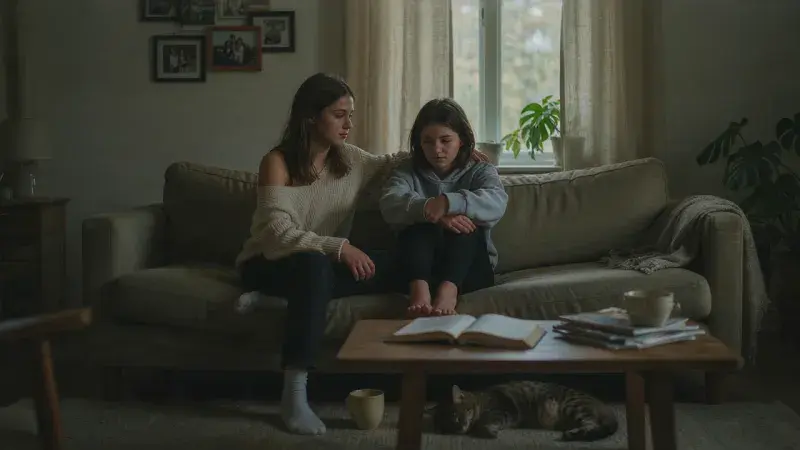
Sally told me that at times she felt responsible for her sibling and she felt that she had to be the one who coped, even when she was struggling herself.
For example, she remembered a time when both girls were anxious in a shop, Grace shut down and couldn’t move while Sally just wanted to go home. I focused on Grace and told Sally she needed to cope for a bit.
Or when we asked Sally to go in to Grace to see if she could help her to join us on an outing. This sometimes worked, but talking to Sally I realised it hadn’t been fair to give her that responsibility and that she felt terrible if she didn’t manage to help Grace.
Or the day I needed to supervise Grace’s tuition, while working on my laptop, while Sally was having a meltdown about going to therapy on the bus alone. Eventually I took Sally, but I know I wasn’t kind about it.
The situations couldn’t always be helped. I couldn’t be in two, let alone three, places at once. But looking back, I think it would have helped if I had acknowledged Sally’s difficulties and feelings first, before turning my attention to Grace. Sometimes being heard makes a big difference, even when nothing can be changed for practical reasons.
Tell siblings what they need to know
Sally also said we should have told her more about what was going on. She said she worried more because she didn’t have enough information about what was being done to help. Sometimes, in trying to protect a child from the stress of a difficult situation, we can unintentionally leave them feeling excluded or worried.
I tried to protect Sally from a how bad things were for her sister and also wanted to protect Grace’s privacy, quite rightly. But with hindsight I realise I could have asked Grace’s permission to give Sally a little more insight and also found a way to share more, not just about what was difficult, but what we were doing about it.
Age-appropriate information can help siblings make sense of what they are seeing, without making them responsible for it.
Make some space that belongs to them
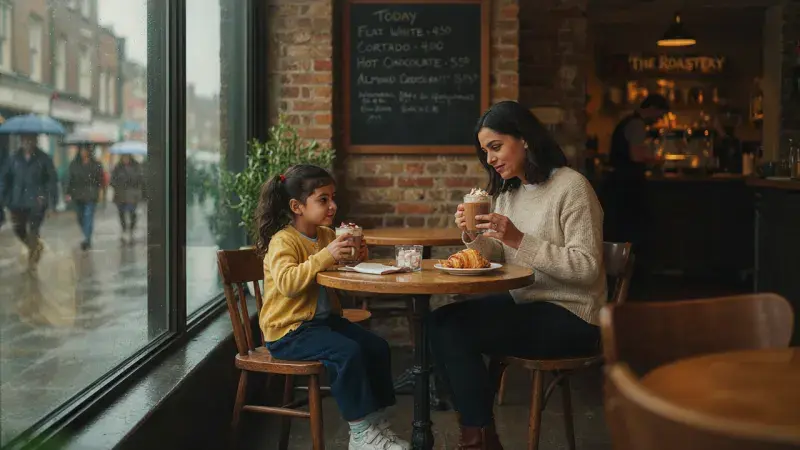
Sally told me she valued the one-to-one moments we managed to create. Importantly, we didn’t talk about Grace at these times. It was protected time for Sally to use however she wished.
Something else we got from the Siblings Without Rivalry book was that siblings need to be allowed to express negative feelings about each other. If Sally needed to say that her sister was difficult, or spoiling a family outing, we listened without judging or making excuses for Grace. I will admit that I had to do some deep breathing during these times as it went against the way I had been brought up! But we knew it was the right thing to do because so often, after a particularly fierce moan, Sally would go and give her sister a hug. It was as if letting go of the difficult feelings freed her up to feel love for Grace again.
Another important routine was Sally calling me every day as she walked home from school. Sometimes I could only speak briefly because of work; sometimes we were able to talk for the whole 20-minute walk. It kept me connected with the everyday details of her world and, again, it was a bit of protected space for our relationship.
Keep their world bigger than the family crisis
We encouraged Sally to keep up her friendships, relationships with the extended family and hobbies and did what we could to facilitate that. Looking back, she says this was really important.
Friends, relatives and activities outside the immediate family can give a child somewhere else to belong – somewhere that isn’t connected to their sibling’s needs.
How can we help the ‘other’ child?
When one child is in crisis, sometimes the crisis really does have to come first. If there’s a magic formula for doing this without any impact on a sibling, it hasn’t been discovered yet. There will be days when you simply cannot divide yourself into enough pieces. I have lived this truth, and it’s a painful one to accept.
But some things can help. I’ve drawn these from our experiences and from research on families like ours:
- Keep up one-to-one time, however short or imperfect. Keep this space entirely for them.
- Acknowledge their feelings, even if they are negative about their sibling. They can love their sibling and still feel angry, jealous, worried or fed up with them.
- Don’t make them responsible for coping. They are allowed to have their own needs, including on days that are hard for their sibling.
- Share age-appropriate information, while respecting their sibling’s privacy.
- Explain what adults are doing to help. The unknown can be more frightening.
- Encourage friendships and interests outside the family.
- Notice changes in their wellbeing, including mood, sleep, anxiety or school attendance.
Where are we now?

When things were really tough, my relationship with Sally took a battering for a while. The good news is that we get on very well again these days. She and Grace are very close and look out for each other, which is something that warms my heart as their mum.
As well as evidence on the negative impact, studies also show some positive outcomes for siblings in families like ours, for example they can develop deep compassion and empathy. Those with a neurodivergent sibling are often very positive and proud of their brother or sister’s differences and achievements. I can definitely see all this in Sally now she is older.
The positives don’t erase what happened, or the mistakes we made. We don’t pretend that everything was fine, that it was just ‘character building’ for Sally, or that we got everything right. But it seems the little things we were able to do helped our family relationships to recover as things improved.
Research:
Siblings of Persons with Disabilities: A Systematic Integrative Review of the Empirical Literature
https://pubmed.ncbi.nlm.nih.gov/39414751/
A systematic review of the experience of being a sibling of a child with an autism spectrum disorder
https://pmc.ncbi.nlm.nih.gov/articles/PMC8264626/?utm_source=chatgpt.com